


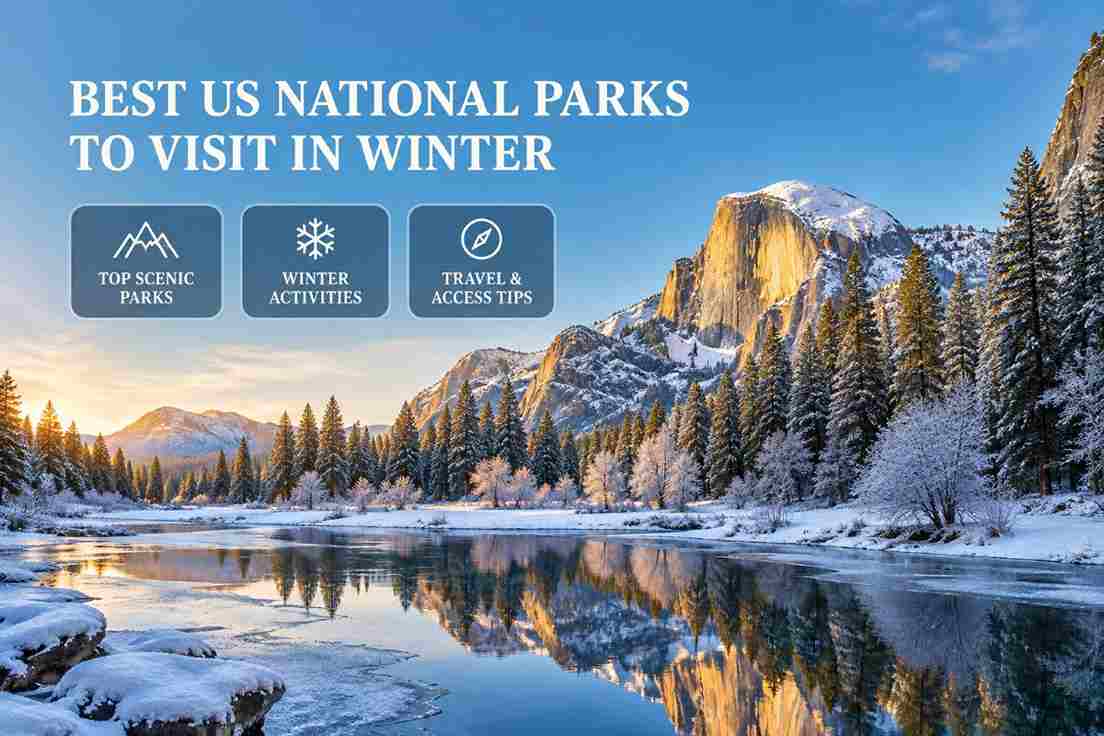
Winter can be one of the best times to explore US national parks, but the right destination depends on what you want from the trip. Some parks offer mild desert weather and accessible hiking trails, while others become snow-covered landscapes with limited road access and special winter activities.
For a winter visit, Death Valley, Joshua Tree, Everglades, Big Bend, Zion and the South Rim of Grand Canyon are strong options for travellers who prefer milder conditions. Yellowstone, Yosemite and Bryce Canyon offer memorable snowy scenery, but you need to plan around road closures, cold temperatures and changing weather.
The key is to choose a park that suits your travel style, check the National Park Service (NPS) updates before departure, and avoid assuming that every road or facility stays open throughout winter.
The biggest difference between winter and summer park travel is access. A destination may remain open while its high-elevation roads, campgrounds, visitor centres or popular trails close for the season. For example, Yellowstone keeps one road corridor open to ordinary vehicles while most interior roads switch to snowmobile and snowcoach access; Yosemite remains accessible in Yosemite Valley even when Tioga Road is closed.
The parks below are grouped by the kind of winter experience they offer, rather than presented as a one-size-fits-all ranking.
Table of Contents
1. Death Valley National Park, California and Nevada – Best for Mild Desert Weather
Death Valley is one of the strongest choices if you want to explore a national park without dealing with heavy winter snow. Its low-elevation areas have mild daytime temperatures, making winter and spring more comfortable for sightseeing, photography and hiking than the extreme summer heat.
Popular stops include Badwater Basin, Zabriskie Point, Mesquite Flat Sand Dunes and Artist’s Drive. You can also explore scenic desert roads and enjoy the park’s dramatic mountain and salt-flat landscapes.
- Winter weather: Daytime temperatures in lower areas are generally mild, while nights can approach freezing. Higher elevations are colder, so conditions vary across the park.
- Road and access considerations: Most popular areas can be reached by road, but winter storms, flooding and road damage can cause temporary closures. Check the park’s current conditions before setting out, especially if you plan to drive remote routes.
- Best for: Desert scenery, photography, scenic drives and comfortable daytime exploration.
2. Everglades National Park, Florida – Best for Wildlife Watching
Winter is one of the most rewarding times to visit Everglades National Park. December through April generally falls within the dry season, when humidity is lower, temperatures are more comfortable, and mosquitoes tend to be less troublesome.
The park offers a very different winter experience from western mountain parks. Instead of snow-covered trails, visitors can explore wetlands, mangrove forests and waterways while looking for alligators, wading birds and other wildlife.
Consider visiting the Anhinga Trail, Shark Valley and the Flamingo area. Boat tours and guided activities can also help you explore parts of this large wetland ecosystem.
- Winter weather: Typical dry-season conditions include average highs around 77°F and lows around 53°F. Occasional cold fronts can bring much cooler temperatures.
- Road and access considerations: The park is generally accessible throughout the year, but facilities and activities differ between entrances. Check visitor-centre hours, tour schedules and current notices before travelling.
- Best for: Wildlife photography, birdwatching, boating and nature-focused trips.
3. Joshua Tree National Park, California – Best for Desert Hiking and Rock Formations
Joshua Tree is a popular winter option for travellers who want outdoor activities without intense summer heat. Its distinctive Joshua trees, giant boulders and open desert landscapes make it an appealing destination for hiking, climbing and photography.
Popular places include Hidden Valley, Barker Dam, Skull Rock and Keys View. The cooler season is also a good time to explore the park’s trails during daylight hours.
- Winter weather: Days are generally cool, with average temperatures around 60°F, but nights can fall below freezing. Snow is possible at higher elevations.
- Road and access considerations: The park’s main roads provide access to popular areas, but weather and local conditions can affect individual routes and facilities. There are long distances between some services, so arrive with enough fuel, water and supplies.
- Best for: Hiking, rock climbing, landscape photography and short desert road trips.
4. Big Bend National Park, Texas – Best for Remote Winter Adventures
Big Bend offers a mix of desert scenery, mountain landscapes, river views and wide-open spaces. Winter is often a pleasant time to explore because temperatures are generally milder than during the hot summer months.
You can visit Santa Elena Canyon, drive the Ross Maxwell Scenic Drive, explore the Chisos Mountains or enjoy views along the Rio Grande. The park’s remote setting also makes it appealing to travellers looking for a quieter outdoor holiday.
- Winter weather: Conditions can range from below freezing to above 80°F, depending on elevation and location. The desert areas are generally warmer than the Chisos Mountains.
- Road and access considerations: Some roads are unpaved and require extra care, particularly after rain. Mountain weather can differ significantly from conditions at park headquarters. Check road reports and weather forecasts for the specific area you plan to visit.
- Best for: Scenic drives, hiking, camping and travellers comfortable with remote destinations.
5. Saguaro National Park, Arizona – Best for Desert Landscapes and Sunshine
Saguaro National Park, near Tucson, is a good option for visitors who want to experience the Sonoran Desert during its cooler season. Its giant saguaro cacti, mountain scenery and desert trails create a landscape unlike the forests and alpine scenery found in northern parks.
The park has two separate districts: the Tucson Mountain District to the west and the Rincon Mountain District to the east. Both offer scenic drives, hiking opportunities and viewpoints.
- Winter weather: Tucson-area winter days average around 65°F, with cooler nights near 40°F. Higher elevations can receive snow, so mountain trails may have very different conditions from the lower desert.
- Road and access considerations: The two districts are separated by the city of Tucson, so allow driving time between them. Check trail conditions if you plan to hike at higher elevations.
- Best for: Desert scenery, cactus photography, hiking and relaxed scenic drives.
6. Zion National Park, Utah – Best for Winter Canyon Views
Zion is worth considering if you want impressive canyon scenery without the peak-season summer crowds. Winter can bring snow to the surrounding cliffs, creating a striking contrast with the red rock landscape.
Popular places include the Riverside Walk, Pa’rus Trail and viewpoints along Zion Canyon. However, not every trail is suitable for winter conditions, and icy sections can make some routes hazardous.
- Winter weather: Daytime temperatures can reach around 50–60°F, while nights may fall well below freezing. Snow and ice are possible, particularly in shaded areas and at higher elevations.
- Road and access considerations: Zion Canyon shuttle services usually operate on a reduced or seasonal schedule during winter. When shuttles are not running, private vehicles may be allowed on Zion Canyon Scenic Drive, but parking can fill up. Kolob Canyons and other roads may close during poor weather.
- Best for: Canyon photography, winter hiking and scenic drives.
7. Grand Canyon National Park, Arizona – Best for Snowy Canyon Views
The Grand Canyon is open throughout the year, and winter can offer a memorable way to see its immense landscape. Snow occasionally covers parts of the South Rim, creating a dramatic contrast between white rock edges and the canyon’s red and orange layers.
The South Rim is the practical choice for most winter visitors. You can explore viewpoints, walk sections of the Rim Trail and visit Grand Canyon Village.
- Winter weather: The South Rim is at a high elevation, so expect cold temperatures, possible snow and icy conditions. The inner canyon is generally warmer, but hiking into it still requires careful preparation.
- Road and access considerations: The South Rim remains open all year, although snow and ice can temporarily affect roads. The North Rim follows a different seasonal schedule and closes to vehicle traffic from December 1 through May 14. For the 2026–27 winter, the North Rim’s developed area and roads are also subject to additional closures following the Dragon Bravo Fire.
- Best for: Scenic viewpoints, photography and visitors who want a major national park experience without relying on summer access.
8. Bryce Canyon National Park, Utah – Best for Snow-Covered Red Rock Scenery
Bryce Canyon looks particularly distinctive in winter. Snow settles around its orange and red rock formations, known as hoodoos, creating excellent opportunities for landscape photography.
The Bryce Amphitheatre is a good starting point, with viewpoints including Sunrise Point, Sunset Point and Inspiration Point. Snowshoeing and cross-country skiing are also possible when conditions allow.
- Winter weather: Bryce sits at around 8,000 feet, so temperatures can be very cold. Average January highs are around 37°F, while average lows are near 15°F. Snowstorms are common from December through February. <Cite refs={[“turn909371search3″,”turn909371search10”]}/>
- Road and access considerations: The main park road can close beyond mile marker 3 after snowstorms while crews clear the route. Some trails and facilities also close seasonally. Wear footwear with suitable traction because paths and viewpoints can become icy.
- Best for: Snow photography, winter hiking and visitors who enjoy cold-weather scenery.
9. Yosemite National Park, California – Best for Winter Mountain Scenery
Yosemite offers a different kind of winter experience, with snow-covered cliffs, frozen landscapes and quieter areas around Yosemite Valley. It is particularly appealing to photographers and travellers who enjoy mountain scenery.
Yosemite Valley and Wawona remain accessible by car throughout the year, weather permitting. Visitors can explore viewpoints, waterfalls and valley trails, while Badger Pass offers seasonal skiing and snow activities.
- Winter weather: Temperatures vary with elevation. Yosemite Valley can experience snow and freezing nights, while higher areas receive much heavier snowfall.
- Road and access considerations: Tioga Road usually closes in November and remains closed until late spring or early summer. Glacier Point Road also closes beyond the Badger Pass area during winter. Tire chains may be required on park roads, so check the latest NPS conditions before driving.
- Best for: Mountain photography, snow activities and winter scenery.
10. Yellowstone National Park, Wyoming, Montana and Idaho – Best for a True Snowy National Park Experience
Yellowstone is one of the most distinctive places to visit in winter. Snow transforms its forests, geysers and open landscapes, while wildlife viewing and guided snowcoach trips offer experiences that are very different from a summer visit.
Winter highlights include Mammoth Hot Springs, the northern range and guided trips to thermal areas such as Old Faithful. Bison and other wildlife may be seen against snowy backgrounds.
- Winter weather: Expect freezing temperatures, snow and icy conditions. Dress in layers and prepare for sudden weather changes.
- Road and access considerations: Most park roads close to ordinary vehicles during winter. The road between the North Entrance and Northeast Entrance is generally the only route open year-round to regular vehicles. Other interior routes typically switch to guided snowmobile and snowcoach access from mid-December to mid-March. The 2026–27 oversnow season is scheduled to begin on December 15, with different closing dates for individual routes.
- Best for: Snow-covered landscapes, wildlife viewing, geothermal features and guided winter adventures.
How to Choose the Best US National Parks to Visit in Winter
Your ideal destination depends on the weather and activities you prefer.
| Your winter travel preference | Parks to consider |
|---|---|
| Mild desert weather | Death Valley, Joshua Tree, Saguaro |
| Wildlife and birdwatching | Everglades, Yellowstone |
| Canyon scenery | Zion, Grand Canyon, Bryce Canyon |
| Remote outdoor adventures | Big Bend |
| Snow-covered mountain landscapes | Yosemite, Yellowstone, Bryce Canyon |
| Easier winter sightseeing | Everglades, Death Valley, Grand Canyon South Rim |
If you dislike cold weather, focus on Florida, Arizona and lower-elevation desert parks. If you want snow, winter photography or guided snow activities, consider Yellowstone, Yosemite or Bryce Canyon instead.
Winter National Park Planning Tips: Weather, Roads and Safety
A successful winter trip requires more preparation than simply choosing a park. Conditions can change quickly, and a road that is open when you plan your trip may close after a snowstorm.
Keep these points in mind:
- Check official road updates: Use the individual park’s NPS conditions page shortly before departure and again on the day of travel.
- Prepare for icy roads: Carry suitable winter equipment where required. In some parks, tire chains are necessary even for four-wheel-drive vehicles.
- Pack for changing temperatures: Bring warm layers, waterproof clothing, gloves and suitable footwear. Desert parks can have cold nights despite mild afternoons.
- Check facility schedules: Visitor centres, restaurants, campgrounds and shuttle services may operate on reduced winter schedules.
- Book accommodation carefully: Confirm that your chosen lodge or campground is open during your travel dates.
- Carry essential supplies: Keep water, food, a first-aid kit, a flashlight and a charged phone in your vehicle. Download offline maps before entering areas with limited mobile coverage.
- Allow extra travel time: Snow, ice and temporary road closures can affect driving plans. Avoid building an itinerary around tight connections.
For reliable updates, start with the National Park Service website, then check state transportation services for highway conditions outside park boundaries.
Frequently Asked Questions
What are the warmest US national parks to visit in winter?
Everglades, Death Valley, Joshua Tree, Saguaro and Big Bend are good options for milder winter conditions. However, desert nights can still be cold, and temperatures vary with elevation.
Are US national parks open in winter?
Many US national parks remain open throughout winter, but individual roads, trails, campgrounds and visitor facilities may close seasonally or during severe weather. Always check the official park website before travelling.
Which national parks have snow in winter?
Yellowstone, Yosemite, Bryce Canyon, Grand Canyon’s South Rim and parts of Zion can receive winter snow. Snowfall varies by year and elevation, so check current forecasts before planning snow-related activities.
Is Yellowstone worth visiting in winter?
Yes, if you enjoy snowy scenery, wildlife viewing and guided winter activities. However, most interior roads close to ordinary vehicles, so you need to plan around snowcoach or snowmobile access.
Is the Grand Canyon South Rim open during winter?
Yes. The South Rim remains open year-round, although snow and ice can temporarily affect roads and visitor activities. The North Rim closes to vehicle traffic during its regular winter season.
Final Thoughts
The best US national parks to visit in winter depend on whether you prefer mild desert weather, wildlife encounters or snow-covered landscapes. Death Valley, Everglades and Joshua Tree are strong choices for milder outdoor exploration, while Yellowstone, Bryce Canyon and Yosemite offer a more traditional winter setting.
Before booking, check road closures, weather forecasts and seasonal services for your chosen park. A flexible itinerary and the right equipment will make it easier to enjoy the scenery while staying safe.